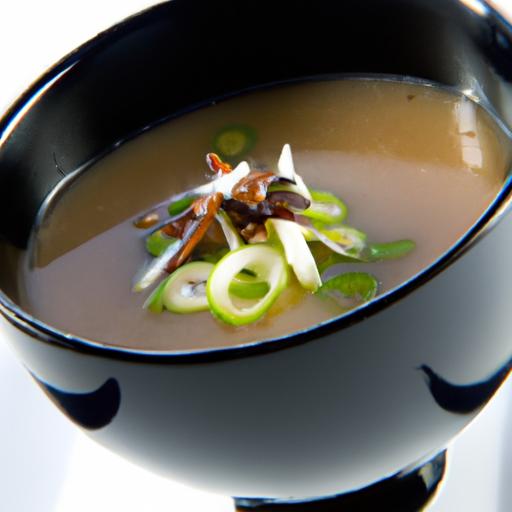

When you think of miso soup, images of steaming bowls brimming with savory broth, silken tofu, and seaweed swiftly come too mind. It’s a quintessential comfort food,warm and soothing-a staple in Japanese cuisine that has found its way onto tables worldwide. but what happens when tradition takes a backseat and miso soup takes the plunge into the fridge? Enter chilled miso soup: a curious departure from the norm that promises a refreshing twist for hot days and adventurous palates alike. Is this cold concoction a clever reinvention that breathes new life into an ancient classic, or does it risk turning a beloved staple into a culinary misstep?
Chilled miso soup offers a delightful departure from the familiar warmth of traditional Japanese broth, inviting culinary adventurers to explore the delicate balance of fermented umami and refreshing coolness. historically enjoyed as a warming comfort, this reinterpretation harnesses the science behind fermentation and cooling techniques to craft a rejuvenating and layered flavor profile that elevates miso beyond its classic hot bowl presentation.
Prep and Cook Time
Preparation: 15 minutes | Chilling: 1 hour | total Time: 1 hour 15 minutes
yield
Serves 4 as a light appetizer or palate cleanser
Difficulty Level
easy – perfect for all skill levels
Ingredients
- 4 cups dashi stock (preferably homemade kombu and bonito broth)
- 3 tbsp white miso paste, well-sifted
- 1 tbsp light soy sauce (optional, for depth)
- 1/4 cup silken tofu, cubed small
- 2 tbsp finely sliced green onions
- 2 tbsp wakame seaweed, rehydrated and chopped
- 1 tsp toasted sesame seeds (for garnish)
- Ice cubes or crushed ice (to chill, optional)
- Fresh shiso leaves or microgreens (for a herbaceous finish)
Instructions
- Prepare the broth: Warm the dashi stock gently in a saucepan over medium heat, ensuring it does not boil to preserve subtle flavors.
- Dissolve the miso: In a small bowl, whisk the white miso paste with a ladle of warm dashi until completely smooth to avoid clumps and bitterness.
- Combine: Slowly stir the miso mixture back into the warm dashi stock. Add light soy sauce if desired, tasting for balance.
- Cool the soup: Transfer the soup to a shallow, wide container to encourage rapid cooling. Allow it to reach room temperature before refrigerating for at least 1 hour.
- Add fresh ingredients: Just before serving, gently fold in the cubed silken tofu, rehydrated wakame, and sliced green onions.
- Serve chilled: Pour the soup into small bowls over a few ice cubes if desired for an extra refreshing chill.
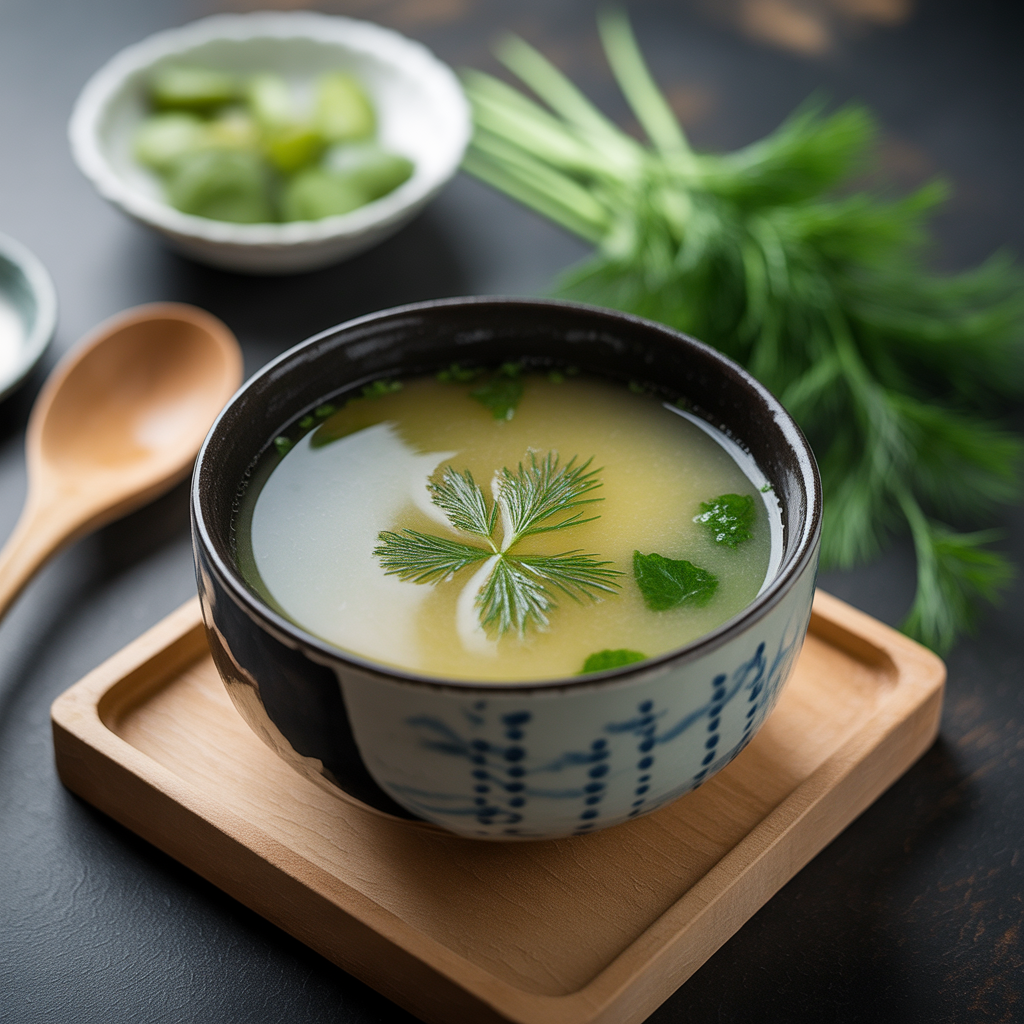
- Garnish: Top each bowl with toasted sesame seeds and a sprig of fresh shiso or microgreens to add aromatic complexity and a splash of vibrant green.
Tips for Success
- Choose your miso wisely: White (shiro) miso lends a subtle sweetness that complements the chilled format best. Avoid darker misos that may overpower the delicate flavor when cold.
- Maintain umami balance: Miso’s fermented nature means flavor can intensify when heated; chilling tempers this and lets nuances blossom.
- Keep dashi light: Overly strong or salted stock can mutate the soup’s refreshing profile-aim for a clean,clear broth base.
- Serve promptly after chilling: The texture of silken tofu changes if left too long; add it at the last moment to retain its silky mouthfeel.
- Make ahead option: Prepare the broth and miso mixture up to 24 hours in advance and refrigerate. Add fresh ingredients just before serving for best freshness.
Serving Suggestions
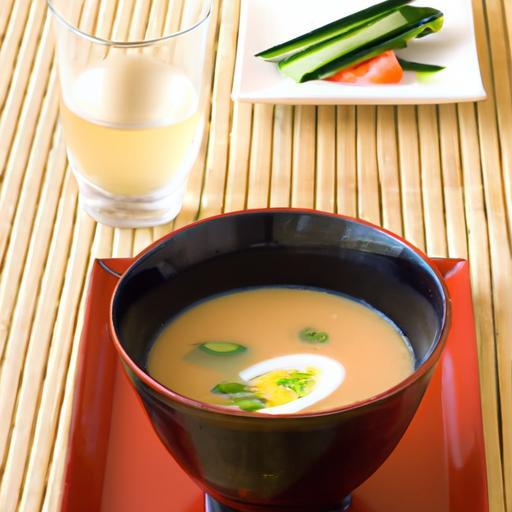
Present chilled miso soup in clear glass bowls to showcase the vibrant, translucent broth punctuated by soft tofu cubes and verdant wakame. Pair with a delicate cucumber salad dressed in rice vinegar or crispy tempura for contrasting textures. For visual appeal, place the bowls on minimalist wooden trays with bamboo chopsticks to highlight the soup’s serene aesthetic. Add a side of pickled ginger or a small dish of wasabi for guests seeking a hint of spice.
| Nutrient | Per Serving |
|---|---|
| Calories | 65 kcal |
| Protein | 5 g |
| Carbohydrates | 4 g |
| Fat | 2 g |

For those intrigued by exploring more chilled broths and fermented ingredients, check out our Summer Cold Soups collection. To dive deeper into the science of fermentation that underpins miso’s complex flavor, consult the detailed insights provided by the ScienceDirect Miso overview.
Q&A
Q&A: Chilled Miso Soup – A Refreshing Twist or Culinary No-No?
Q1: What is miso soup traditionally like?
A: Traditionally, miso soup is a warm, comforting Japanese staple made from dashi broth and miso paste, often garnished with tofu, seaweed, and scallions. It’s served hot to enhance the deep umami flavors and provide a cozy start to any meal.
Q2: So, what happens when you chill miso soup?
A: Chilling miso soup transforms it into a refreshing, light dish perfect for hot days.The cold temperature highlights different flavor notes-like the saltiness and subtle sweetness-while giving it an invigorating, crisp quality. It’s like miso soup’s cool cousin showing up at summertime’s party.
Q3: Is chilled miso soup a common practice in Japan?
A: While not as ubiquitous as hot miso soup, chilled versions do exist and are enjoyed during warmer months. Some regional variations and modern chefs embrace chilled miso soup, pairing it with fresh seasonal ingredients like cucumber and shiso leaves for a vibrant twist.
Q4: Does chilling affect the nutritional benefits of miso?
A: The nutritious components of miso-such as probiotics from fermentation, vitamins, and minerals-generally remain intact when chilled. Though, keep in mind that reheating and cooling cycles can reduce probiotic efficacy, so it’s best to prepare chilled miso soup fresh and consume promptly.
Q5: Are there any potential culinary pitfalls to chilling miso soup?
A: Yes, some flavor nuances can be muted when cold, and the texture of delicate ingredients like tofu or wakame seaweed might become less appealing. Additionally, as miso paste doesn’t react well to prolonged boiling, it must be incorporated carefully regardless of temperature to maintain ideal flavor.
Q6: How can home cooks successfully make chilled miso soup?
A: Start with a lightly flavored dashi broth, dissolve the miso paste off heat to preserve umami, and cool the mixture completely before adding fresh, crisp garnishes like cucumber ribbons, radish slices, or even a handful of chilled edamame. Serve immediately for best taste and texture.
Q7: Ultimately, is chilled miso soup a refreshing twist or a culinary no-no?
A: Chilled miso soup is undeniably a refreshing twist-offering a new way to enjoy traditional flavors with seasonal flair. While it might not replace the warm classic, it’s a delightful experiment that expands the miso soup repertoire, especially for those seeking cool, savory refreshment.
Whether you’re a miso traditionalist or an adventurous foodie, chilled miso soup invites you to rethink this humble dish-proving that sometimes, the coolest ideas come from shaking up the hottest classics.
To Conclude
Whether you’re a seasoned miso enthusiast or a curious culinary adventurer, chilled miso soup invites you to rethink tradition with a cool, refreshing twist. It challenges the conventions of warm comfort while offering a unique texture and flavor experience that awakens the palate on a hot day. ultimately,whether chilled miso soup is a refreshing innovation or a daring departure depends on your taste buds and willingness to explore. So next time the summer heat calls for something different, give this unconventional classic a chance-it might just surprise you with its subtle charm and savory coolness.